Food for muscle growth: what to actually eat
5 min read
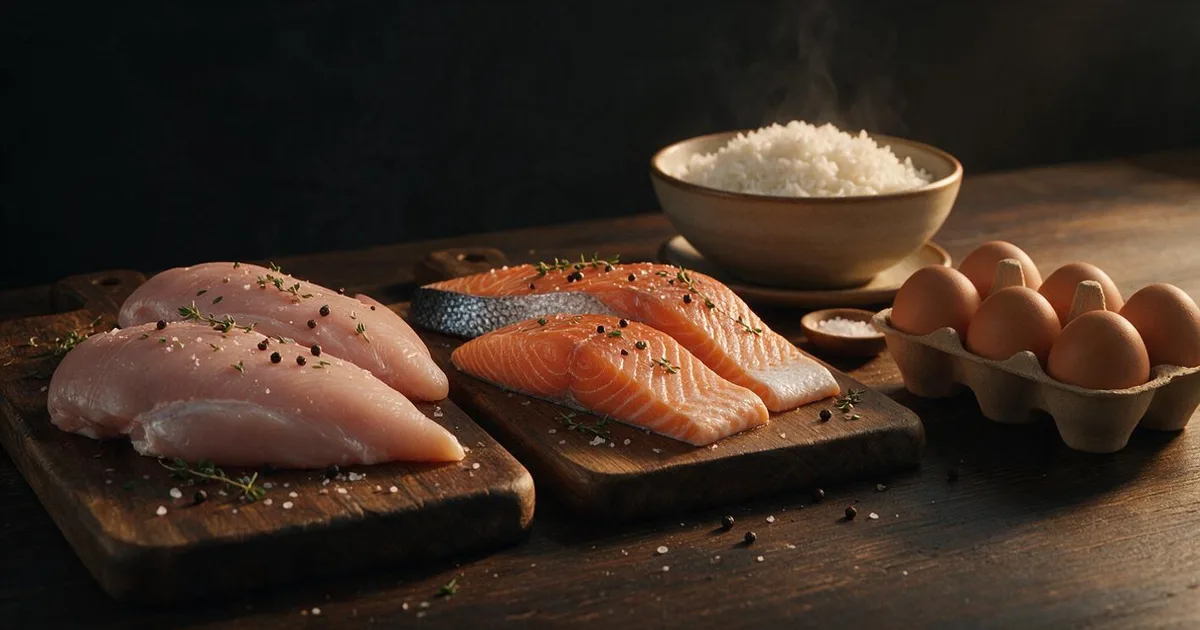
Training provides the signal to grow, but food provides the building material. You can follow a perfect program and still see no results if the diet does not match the goal. This guide covers the two targets that matter, the foods that make them easiest to hit, how to arrange them across the day, and a sample day of eating with portions.
The two targets that matter
The first target is a small calorie surplus: 250-500 kcal above maintenance (set yours with the calorie and macro calculator). Muscle is new tissue and building it costs energy, so without a surplus the body has little to build with. The second is protein: 1.6-2.2 g per kilogram of body weight per day. Research puts the point of diminishing returns at about 1.6 g/kg for most people, with the higher end mainly useful during a cut or for advanced trainees (Morton et al., 2018). For an 80 kg trainee that means roughly 130-175 g of protein a day. Carbohydrates and fats fill the remaining calories.
The best protein sources
Build most meals around one of these (protein per 100 g):
- Chicken or turkey breast: about 30 g
- Lean beef: about 26 g
- Eggs: about 13 g (6-7 g per egg)
- Curd cheese: about 18 g, Greek yogurt: about 10 g
- Fish: tuna about 25 g, salmon about 20 g
- Legumes: cooked lentils, chickpeas and beans about 8-9 g
- Whey protein: about 20-25 g per scoop, for the days regular food is not enough
Spread the protein across 3-5 meals of 25-40 g each. The daily total matters most, but an even spread supports muscle building better than one giant dinner (Jäger et al., 2017).
Carbohydrates fuel the training
- Oats
- Rice and buckwheat
- Potatoes
- Whole-grain bread and pasta
- Fruit
Carbohydrates refill muscle glycogen, the fuel of heavy sets. Once protein and fats are set, they fill most of the remaining calories: usually 4-6 g per kilogram of body weight on training days. Plan a carbohydrate-rich meal 1-3 hours before training and another one after it (more in what to eat before and after a workout).
Fats in moderation
- Nuts and nut butter
- Olive oil
- Avocado
- Fatty fish
Give fats 20-30% of your calories and do not push them much lower, because hormone production depends on them. Watch the portions though: a gram of fat carries more than twice the calories of a gram of protein or carbohydrates.
A sample day for an 80 kg trainee (about 2,900 kcal, 160 g protein)
- Breakfast: oats with a banana, a spoon of peanut butter and a whey shake (about 35 g of protein)
- Lunch: rice with 150 g of chicken breast and vegetables (about 50 g)
- Snack: Greek yogurt with a handful of nuts (about 20 g)
- Dinner: salmon with potatoes and salad (about 30 g)
- Before bed: curd cheese with berries (about 25 g). Its casein digests slowly and feeds the muscles overnight
Together that lands near 160 g of protein. Adjust the portions to your own calorie target. The structure is what matters.
When eating enough is the hard part
For many lean trainees the real obstacle is appetite, not knowledge. Make the calories smaller in volume: whole milk instead of skimmed, rice more often than potatoes, a handful of nuts or dried fruit between meals, an extra spoon of olive oil in the pan, and a shake with milk, oats, banana and peanut butter when a solid meal will not go down. Save the big salad for after the main course rather than before it.
Building muscle on a budget
Expensive food is not a requirement. Eggs, curd cheese, canned tuna and mackerel, chicken leg quarters, oats, rice, frozen vegetables and dried legumes cover protein and carbohydrates for a fraction of the price of ready meals and most supplements. A week of muscle-building food costs less than most people expect when it is built from these staples.
Common mistakes
- Eating "clean" but too little - without a surplus muscle does not grow
- Guessing the surplus instead of counting from a calculated maintenance
- Eating all the protein at dinner instead of spreading it through the day
- Cutting almost all fats to save calories and dragging hormones down with them
- Expecting results from food without a proper program (see a training and nutrition program)
Frequently asked questions
What should I eat to build muscle?
Enough of everything, arranged simply: a protein source in every meal (meat, fish, eggs, dairy or legumes), carbohydrates before and after training, vegetables for fullness, and fats from nuts, oil and fish. No single food builds muscle - the calorie surplus and the daily protein total do.
How much protein do I need to build muscle?
1.6-2.2 g per kilogram of body weight per day. For most people the benefits taper off past about 1.6 g/kg, so the higher end is insurance rather than a requirement. More in how much protein you need per day.
Do I need protein supplements?
No. Whey is simply protein in a convenient powder form. If you reach your daily total with regular food, a supplement adds nothing. It earns its place on busy days or when appetite is the limiting factor.
What should I eat before and after a workout?
Before: a normal meal with carbohydrates and protein 1-3 hours earlier. After: protein and carbohydrates within the next few hours. These details matter far less than the daily totals (more in what to eat before and after a workout).
Can I build muscle and lose fat at the same time?
Beginners, people returning after a break and those carrying more body fat often can, especially on high protein with a small deficit. The leaner and more trained you are, the more these goals pull apart, and picking one at a time becomes more effective.
Can I build muscle on a plant-based diet?
Yes, it just takes more planning: legumes, tofu, seitan and plant protein powders, a slightly higher protein total to offset lower digestibility, and attention to overall calories. The surplus and protein rules stay the same.
A meal plan with exact portions
Tavo Programa builds a weekly diet plan with concrete meals and portions around your calorie target, food preferences and training days.
Read next: Nutrition for muscle growth, How much protein per day and A 3-day training program.
Want a plan made for you?
Get a personalized training, diet or supplement plan built around your body and goals.
Get started